

Decking advice
What Is the Best Decking Material for Your Garden?
Compare hardwood, softwood and composite decking by cost, appearance, upkeep and suitability to find the best option for your garden.
Start with your space
Choose for the way you use your garden
Planning a new deck and feeling overwhelmed by all the different materials available? You’re in the right place!
With different prices, finishes, and care requirements to consider, it’s not always obvious which material will suit your garden and lifestyle.
At CC Fencing, we’ve been installing and repairing decks across Milton Keynes since 2007. We know what tends to work best for different outdoor spaces. And so to help you choose the best decking material for your space, we’ve put together this guide to the three most common decking materials (hardwood, softwood, and composite), and what you need to know about each before buying.
Getting to Know Your 3 Decking Options
Let’s start with the basics. Hardwood and softwood decking are both made from natural timber, while composite boards typically combine wood fibres and plastic. Here’s what each could offer your garden.
Hardwood
Hardwood offers a premium natural finish, with grain and colour that vary between boards. Ask which species is included in your quote, and what care it will need.
Read the material guide
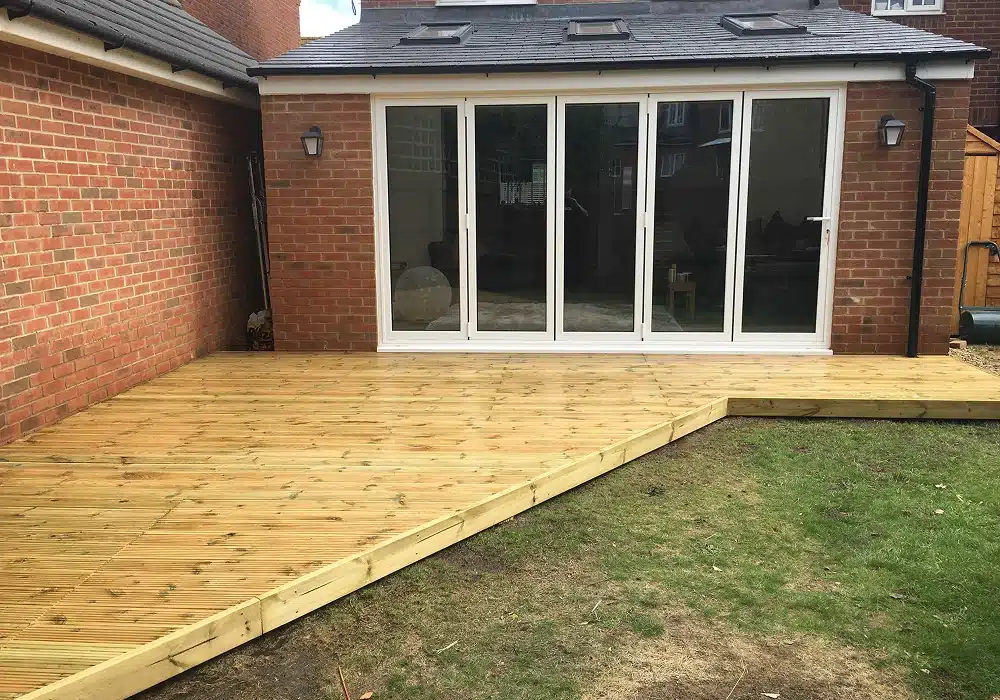
If you love the look and feel of real wood, hardwood decking could be a great fit. The grain and colour vary naturally between boards, giving your deck plenty of character and helping it sit comfortably alongside plants and other garden features.
Many hardwoods used for decking are dense and hard-wearing, but they don’t all perform in the same way. It’s worth asking which species is included in your quote so you know what to expect in terms of durability and care.
You’ll usually pay more upfront for hardwood. But if the natural finish is a big part of what you love about decking, it could be worth the extra investment.
Softwood
Softwood offers a natural timber finish at a lower initial cost. It is a practical option for many gardens, with regular care suited to its treatment and finish.
Read the material guide
If you like the idea of having a natural wooden deck, but hardwood is beyond your budget, softwood could be a practical alternative.
Softwood decking is typically made from pressure-treated timber, such as pine, and generally costs less than hardwood. It’s a practical choice for garden seating and dining areas, and it’s usually easier to cut and work with, especially if your plans include steps or a more unusual layout.
As with any timber used outdoors, the softwood boards need suitable treatment and regular care. So before making your final decision, you’ll want to know what maintenance the boards will need and how often.
Composite
Composite offers a consistent finish with less routine upkeep than timber. It still needs regular cleaning, and the right choice depends on the particular product.
Read the material guide
If you’d rather spend less time maintaining your deck, composite decking might be the option for you. It’s typically made from a blend of wood fibres and plastic, and it also comes in a range of colours and textures, including options designed to resemble real timber.
The boards tend to have a more uniform appearance than natural wood, and many products don’t need sanding, staining, or oiling. You’ll still need to clean them regularly, though, so there’s still some upkeep to plan for. But overall, the upkeep is usually much less involved compared to treating and refinishing timber.
Look beyond the boards
A good deck starts underneath
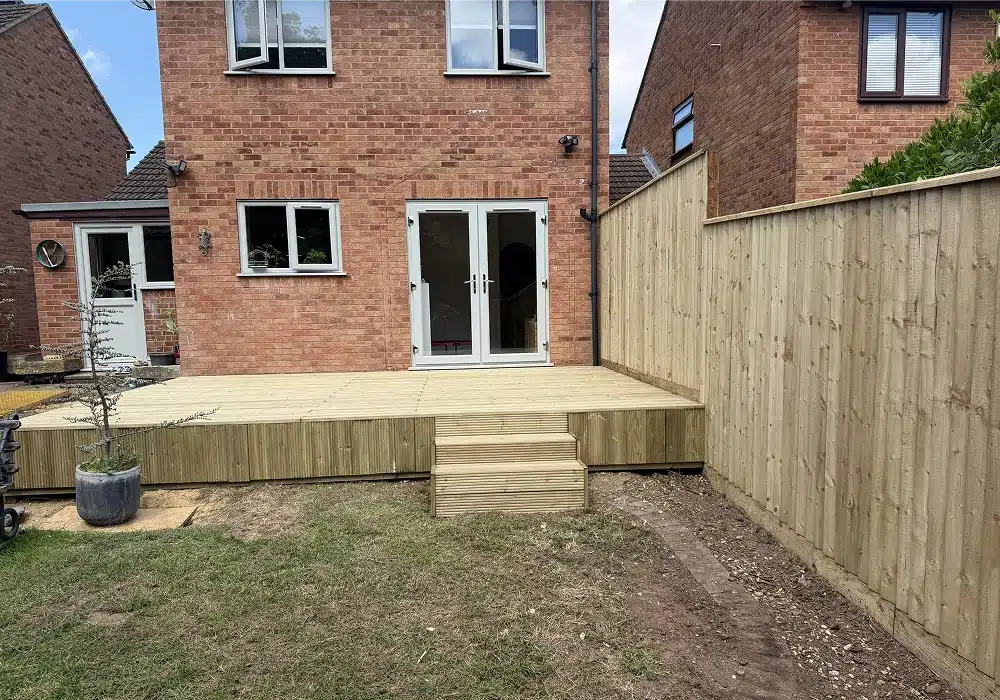
The boards are only part of the installation. Ground preparation, the supporting frame, drainage, ventilation and fixings all affect the finished deck.
Compare quotes for the same size, design and work. Mention hot tubs, planters and other heavy features, and plan drainage, airflow and access for cleaning.
Choosing the Best Decking Material for Your Garden
Thinking about cost, appearance, and upkeep can help you narrow down your options, but it’s also important to think about where your deck will sit and how you’ll use it. Here’s how the three materials could suit different garden setups.
For everyday seating and outdoor dining
If you’re planning somewhere to sit with a coffee or enjoy dinner outside, all three materials could work well.
Softwood could suit you if keeping the initial cost down is a priority. Hardwood is worth considering if you love a premium natural finish, while composite may work best if you want less routine maintenance.
For shaded or damp areas
If your deck will sit beneath trees or beside a shaded boundary, it may take longer to dry after rain. Leaves and algae can also build up, so you’ll need to keep on top of cleaning whichever material you choose.
If you like natural timber, properly treated softwood or a durable hardwood with anti-slip inserts could be worth considering. If you prefer composite, make sure to look for boards that are independently tested for slip resistance in wet conditions.
For sunny gardens, children, and pets
If children will be running around barefoot or pets will be joining you outside, think about how the boards will feel underfoot. Decking can get hot in direct sunshine, particularly darker boards, so consider the colour you choose and how much shade the area gets.
With both softwood and hardwood, you’ll need to keep an eye out for splinters, damaged boards, and raised fixings. Composite can avoid some of these timber-related issues, but it can still get hot in direct sunshine. If you’re leaning towards composite, consider a lighter-coloured range designed to reduce heat build-up, and plan some shade for bare feet and paws.
For hot tubs and heavier garden features
Hardwood is our recommended decking material around hot tubs and outdoor spas because of its strength and water resistance.
If you’re planning to place a hot tub on your deck, let us know before we design it. The supporting frame needs to carry the weight of the filled tub and the people using it.
The same applies to large planters and other heavy garden features. Discuss these during your free site visit so we can plan the structure, board spacing, drainage, and access for cleaning or servicing.
Hardwood, Softwood, and Composite Decking at a Glance
| Consideration | Hardwood | Softwood | Composite |
|---|---|---|---|
| Initial cost | Generally higher | Generally lower | Varies by product; often higher than softwood |
| Appearance | Natural grain and variation; often a premium finish | Familiar natural timber finish | More consistent colours and finishes |
| Routine care | Occasional jetwashing; optional oiling or staining to maintain colour. | Cleaning, checks, and care suited to the treatment and finish | Cleaning and checks; usually no staining or oiling |
| Durability | Potential to last a lifetime with proper installation and care. | Lasting performance with suitable treatment and regular care. | Durable and long-lasting when correctly installed on a solid frame. |
| Main appeal | Premium natural timber | Lower initial cost with a timber look | Reduced routine maintenance |
Compare cost, appearance, maintenance and lifespan
All three materials have different benefits when it comes to cost, appearance, and upkeep. At CC Fencing, we prefer softwood for its natural beauty, but the best choice for your garden depends on your budget, the finish you want, and how much maintenance you’re happy to do.
Cost
Softwood is generally the most affordable option. Hardwood usually costs more, while composite prices vary considerably between entry-level and premium ranges.
Of course, the boards are only part of what you’re paying for. Your installation quote will also cover ground preparation, the supporting frame, fixings, and any steps, along with removing an old deck if needed.
When comparing quotes, make sure to check that they include the same size, design, and work. It’s also worth thinking about what you’re happy to spend on maintenance once the deck is in place, as ongoing care will add to the overall cost of your deck.
Appearance
If you love the character of real wood, both hardwood and softwood have plenty to offer. Natural grain and variations between boards give each deck its own appearance. Hardwood often appeals to homeowners who want a richer timber finish, while softwood offers a familiar wooden look that sits comfortably alongside fencing, lawns and planting.
Keep in mind that timber’s appearance will change over time. As it weathers, it often takes on a silver-grey colour. You might love that aged look, or you might prefer to maintain more of the original colour with a suitable oil or coating.
Composite tends to give you a more consistent finish, with colours and textures to suit different garden styles. You could choose a brown wood-effect board or a grey that complements your windows and doors. If you can, look at samples outdoors before deciding, as the colour and texture can look different in natural light.
Maintenance
Whichever material you choose, you’ll want to sweep away leaves, keep the gaps between boards clear, and clean up spills before they leave stubborn stains.
With softwood, the care routine depends on the treatment and finish you choose. Pressure treatment can help protect certain types of softwood against decay, while a surface oil or stain may help maintain its appearance.
Hardwood care needs very little routine upkeep. An occasional jetwash is usually enough to keep it looking good; avoid chemical cleaning solutions, which can damage the timber. If you want to maintain the original colour rather than let it weather naturally, a suitable oil or stain is an optional extra.
Composite generally doesn’t need regular staining or oiling, but it does need cleaning. Always follow the manufacturer’s guidance on cleaning products and methods, especially if you plan to use a pressure washer.
Longevity
How long a deck lasts depends on the materials, installation, drainage, and care.
Hardwood is a long-term investment, with a properly installed deck offering the potential to last a lifetime.
Softwood provides a practical, lasting surface with suitable treatment and regular care.
Composite also offers a durable surface that can last for many years when installed correctly on a solid frame.
Plan your installation
Find the Best Decking Material and Plan Your Installation With CC Fencing
Choosing your decking should feel exciting, even if there are a few practical decisions to make first.
Our best advice is to start with your budget, preferred finish, and the maintenance you’re prepared to take on. Then, consider where the deck will sit and how you’ll use it. Together, those details will help you and your installer narrow down the very best decking material for your garden.
If you’re looking to replace an old deck or build a new one, we’d love for you to book a free site visit with our team. We can help you weigh up the materials and recommend a layout that makes the most sense for your space.
Request your free site visit and quote
Helpful answers
Frequently Asked Questions About the Best Decking Materials
Can individual decking boards be replaced?
Oftentimes, yes. Timber boards can usually be removed and replaced, while replacing composite boards depends on how they’re fixed in place. Your installer can check what’s possible for your deck.
Can decking be installed over an existing patio?
In many cases, yes. The patio needs to be stable, and there must be enough room for a suitable supporting frame, drainage, and airflow beneath the boards. Your installer can assess the patio before recommending the best approach.
Can I replace timber boards with composite decking?
Possibly, but it’s not always a simple swap. The existing frame needs to be in good condition, with supports spaced correctly for your chosen composite boards and suitable fixings. Your installer can check if the frame can be reused or needs adjusting or replacing.